Signs of Brain Fatigue: Symptoms, Causes, and How to Recover
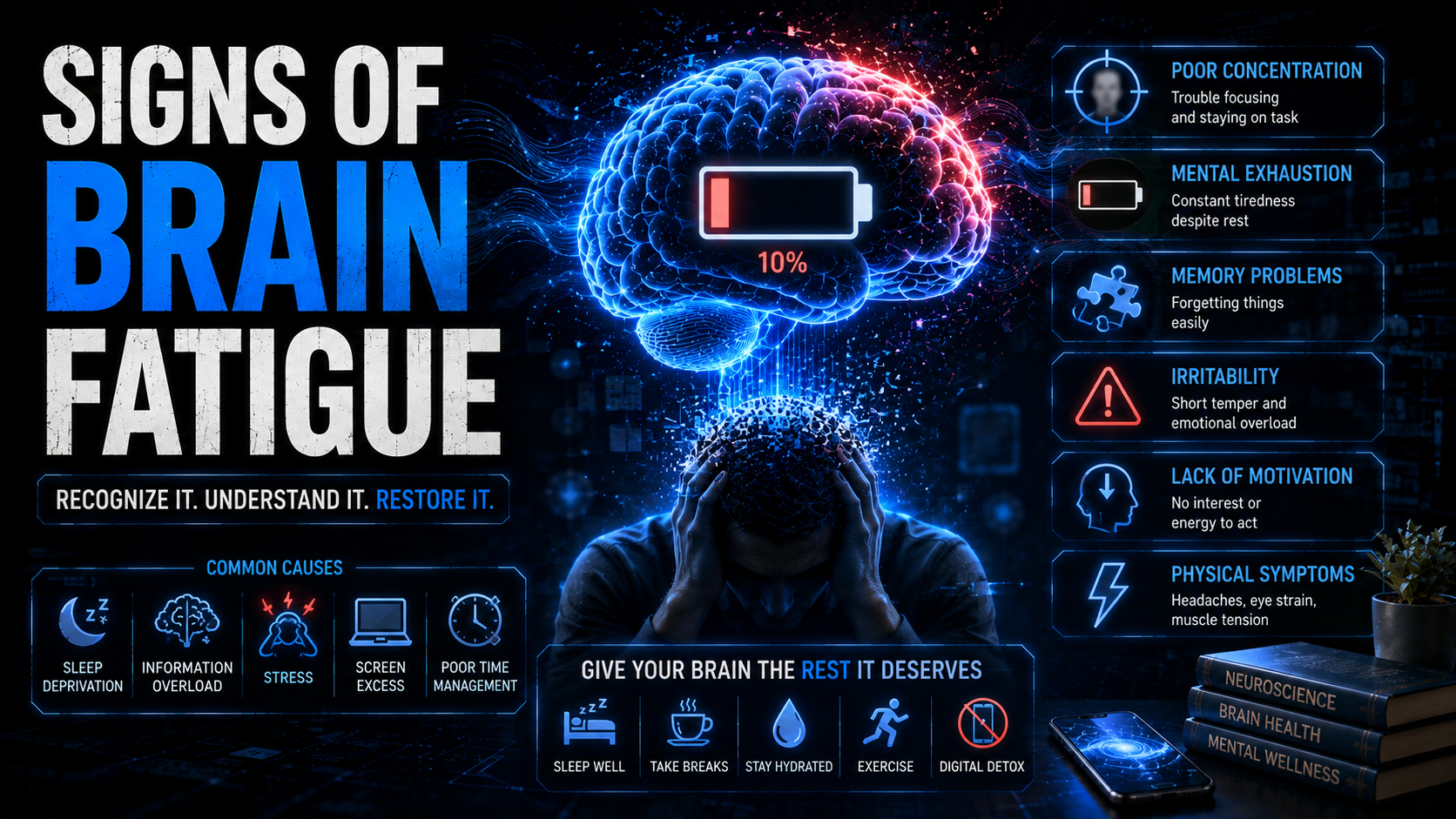
Learn the warning signs of brain fatigue, why mental exhaustion happens, and science-backed strategies to restore focus, memory, and productivity.
Introduction
Everyone experiences mental exhaustion from time to time. After studying for hours, working long shifts, or constantly switching between digital tasks, the brain begins to lose efficiency. This condition is commonly known as brain fatigue or mental fatigue.
Unlike physical tiredness, brain fatigue affects concentration, decision-making, memory, and motivation. Even simple tasks may suddenly feel difficult.
Understanding why brain fatigue occurs allows you to recover faster and prevent long-term cognitive decline.
What Is Brain Fatigue?
Brain fatigue is a temporary reduction in cognitive performance caused by prolonged mental effort. It occurs when the brain has been processing information continuously without sufficient rest.
Mental fatigue is not a disease. Instead, it is the brain's natural signal that cognitive resources need recovery.
Common Symptoms
Difficulty concentrating.
Frequently forgetting information.
Reduced motivation.
Slower thinking speed.
Making more mistakes than usual.
Difficulty making decisions.
Mental fog.
Feeling overwhelmed by simple tasks.
Reduced creativity.
Needing to reread information multiple times.
Mental Fatigue vs Physical Fatigue
Physical fatigue affects muscles and body movement, while mental fatigue affects attention, reasoning, memory, and emotional regulation.
A person may feel mentally exhausted even after sitting at a desk all day because the brain has been working continuously.
What Causes Brain Fatigue?
Long periods of studying.
Working without breaks.
Poor sleep quality.
Stress and anxiety.
Constant phone notifications.
Social media overuse.
Multitasking.
Information overload.
Poor nutrition.
Dehydration.
How Sleep Restores the Brain
During sleep, the brain removes metabolic waste, consolidates memories, and restores normal cognitive function.
Poor sleep prevents these recovery processes, causing brain fatigue to accumulate over multiple days.
Can Stress Cause Brain Fatigue?
Yes. Chronic stress increases cortisol levels, making concentration more difficult and interfering with memory formation.
Long-term stress also increases emotional exhaustion, making everyday tasks feel more demanding.
How Brain Fatigue Affects Learning
Mental fatigue reduces working memory capacity, making it harder to understand new concepts.
Students experiencing brain fatigue often spend more time studying while learning less information.
Warning Signs You Should Not Ignore
Feeling mentally exhausted every day.
Difficulty remembering recent conversations.
Constant lack of motivation.
Unable to concentrate for more than a few minutes.
Frequent headaches after mental work.
Poor decision-making.
Increased irritability.
How to Recover Faster
Get seven to nine hours of quality sleep.
Take regular breaks during work.
Exercise daily.
Drink enough water.
Reduce unnecessary screen time.
Spend time outdoors.
Practice mindfulness.
Read books instead of endlessly scrolling social media.
Solve puzzles instead of consuming passive entertainment.
The 20-20-20 Rule
Every twenty minutes, look at something about twenty feet away for twenty seconds.
This reduces eye strain while also providing a brief mental reset.
Foods That Support Recovery
Blueberries.
Leafy vegetables.
Eggs.
Walnuts.
Salmon.
Whole grains.
Dark chocolate in moderation.
Water.
Daily Habits That Prevent Brain Fatigue
Work on one task at a time.
Avoid multitasking.
Keep a consistent sleep schedule.
Exercise regularly.
Limit unnecessary notifications.
Schedule recovery time every day.
Train your brain with puzzles instead of endless scrolling.
Final Thoughts
Brain fatigue is a warning sign rather than a weakness. Your brain performs best when periods of intense focus are balanced with proper recovery.
Healthy sleep, regular exercise, fewer digital distractions, and consistent brain training can dramatically improve focus, memory, and productivity.
Taking care of your brain today helps maintain cognitive performance for many years to come.
Frequently Asked Questions
What is considered a good IQ score?
An IQ score around 100 is considered average. Scores above average may indicate stronger reasoning abilities, while lower scores simply reflect different cognitive performance compared with the population average.
Can I increase my IQ?
While IQ tends to remain fairly stable, healthy habits, education, regular exercise, quality sleep, and continuous learning can improve cognitive performance and problem-solving ability.
Are online IQ tests accurate?
Most online IQ tests are designed for entertainment and practice. Only professionally administered IQ assessments can provide standardized results.
Does IQ determine success?
No. Success depends on many factors including discipline, education, experience, emotional intelligence, communication skills, and persistence.
Related Articles
What Is IQ? Complete Beginner's Guide
Learn what IQ means, how IQ tests work, average IQ scores, and common myths.
What Is Brain Rot? Causes, Symptoms, and Recovery Guide
Discover what brain rot really means, why it happens, how social media affects attention, and practical ways to improve your focus.
Ready to Challenge Yourself?
Take our free IQ test and discover your cognitive strengths.
Start IQ Test