Critical Thinking Skills: Why They Matter and How to Improve Them
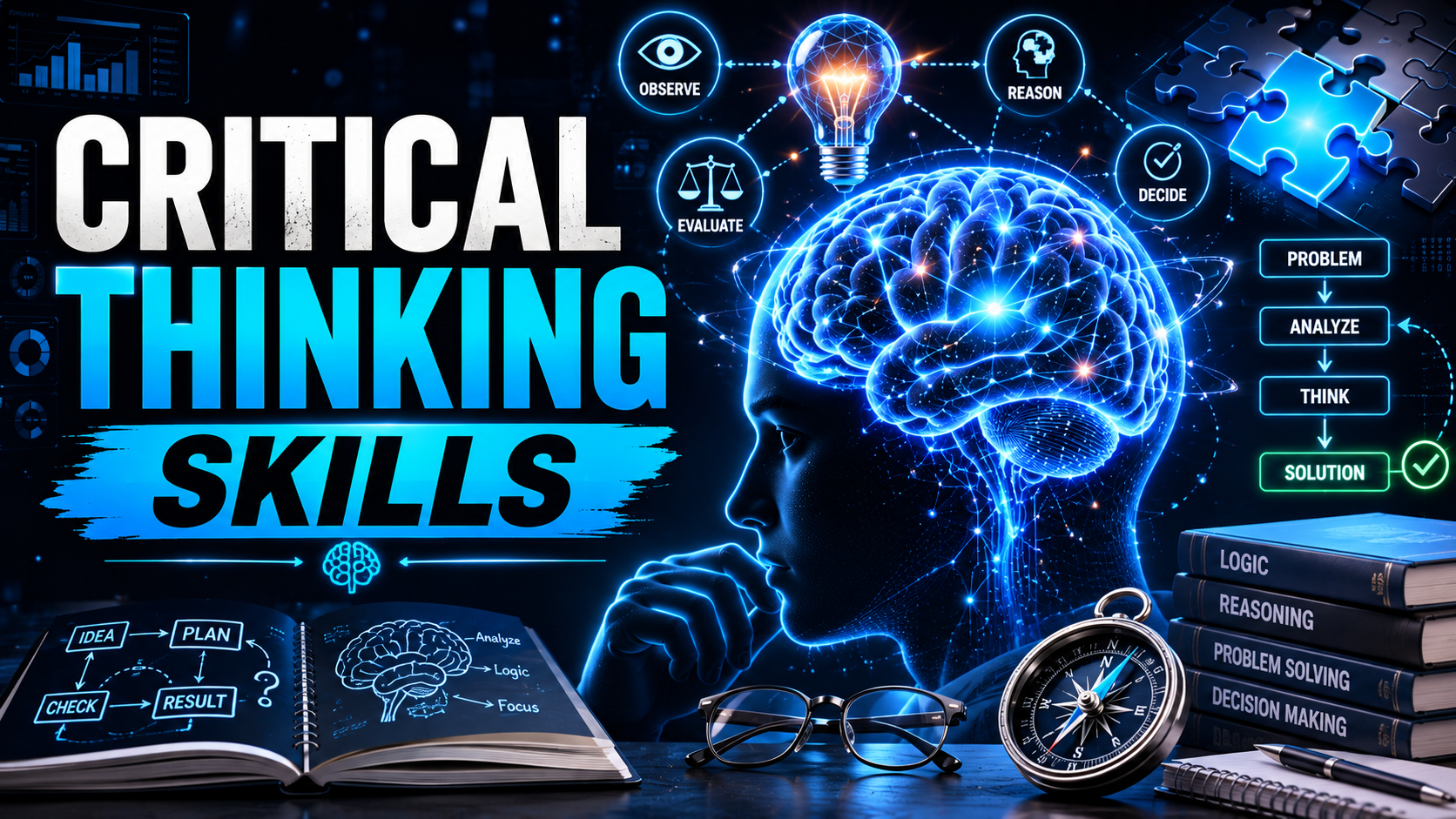
Learn what critical thinking is, why it matters, and practical ways to strengthen your reasoning and decision-making skills.
What Is Critical Thinking?
Critical thinking is the ability to analyze information objectively, evaluate evidence, and make logical decisions instead of relying on assumptions or emotions.
It helps people solve problems more effectively and make better decisions in everyday life.
Why Critical Thinking Is Important
Strong critical thinking skills improve learning, communication, decision-making, and problem-solving. They also help people recognize misinformation and avoid common reasoning mistakes.
These skills are valuable in education, business, science, and daily life.
Characteristics of Critical Thinkers
Critical thinkers stay curious, ask thoughtful questions, consider different perspectives, and rely on evidence before reaching conclusions.
They are willing to change their opinions when new evidence appears.
Common Thinking Mistakes
People often make decisions based on emotions, personal bias, or limited information. These cognitive biases can lead to poor judgment.
Learning to recognize these mistakes is an important part of developing stronger reasoning skills.
How to Improve Critical Thinking
Read regularly, solve logic puzzles, ask questions, analyze arguments, compare multiple sources, and practice making evidence-based decisions.
Brain games and IQ challenges can also strengthen reasoning abilities over time.
Critical Thinking and IQ
Although IQ tests measure reasoning ability, critical thinking also depends on experience, knowledge, curiosity, and the ability to evaluate information carefully.
High IQ alone does not guarantee strong critical thinking skills.
Conclusion
Critical thinking is one of the most valuable skills anyone can develop. It improves decision-making, learning, communication, and problem-solving throughout life.
Practicing logical reasoning every day helps build stronger thinking habits that benefit both personal and professional success.
Frequently Asked Questions
What is considered a good IQ score?
An IQ score around 100 is considered average. Scores above average may indicate stronger reasoning abilities, while lower scores simply reflect different cognitive performance compared with the population average.
Can I increase my IQ?
While IQ tends to remain fairly stable, healthy habits, education, regular exercise, quality sleep, and continuous learning can improve cognitive performance and problem-solving ability.
Are online IQ tests accurate?
Most online IQ tests are designed for entertainment and practice. Only professionally administered IQ assessments can provide standardized results.
Does IQ determine success?
No. Success depends on many factors including discipline, education, experience, emotional intelligence, communication skills, and persistence.
Related Articles
What Is IQ? Complete Beginner's Guide
Learn what IQ means, how IQ tests work, average IQ scores, and common myths.
What Is Brain Rot? Causes, Symptoms, and Recovery Guide
Discover what brain rot really means, why it happens, how social media affects attention, and practical ways to improve your focus.
Ready to Challenge Yourself?
Take our free IQ test and discover your cognitive strengths.
Start IQ Test